
Acrylate Pressure Sensitive Adhesive
( NMPA CDE NO.: F20240000726)
Name: Acrylate Pressure Sensitive Adhesive
Cas: 118677-03-5
Packaging: 0.5kg/bottle
Quality Standard: Enterprise internal control standards
Category: Pharmaceutical excipient. Used as adhesive, etc.
Appearance: Colorless to yellowish viscous liquid with a pungent odor
Application:
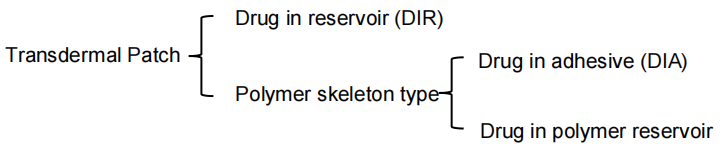
The Drug in reservoir (DIR) type patch uses high-molecular materials to encapsulate the drug into a reservoir, and controls the release rate of the drug through a controlled-release membrane. When the drug is incompatible with the pressure sensitive adhesive or cannot be fully dissolved in it, a DIR type is usually used.
For various types of transdermal drug delivery systems, the adhesive layer is the main component, and pressure sensitive adhesive is the most ideal choice for this purpose. The release agent using adhesive not only helps the patch adhere to the skin surface, but also controls the drug release.
The commonly used pressure sensitive adhesives in transdermal patches include: acrylate pressure sensitive adhesives, natural/synthetic rubber pressure sensitive adhesives, polyisobutylene (PIB) pressure sensitive adhesives, silicone pressure sensitive adhesives, and hot melt pressure sensitive adhesives (SBS/SIS), etc.
Pressure sensitive adhesives can be further classified into solvent-based, emulsion-based, and hot-melt types, depending on their forms.
| Application | Function | Example |
| Transdermal Patch | Adhesive | Rivastigmine transdermal patch |
Features: Match with Henkel :DURO-TAK® 87-2051 Solvent-based Acrylate Pressure Sensitive Adhesive
DURO-TAK 87-2051 is a solvent-based acrylic pressure sensitive adhesive polymerized from acrylate-vinyl acetate monomers and does not contain crosslinking agents that easily cause drug degradation. Its functional groups are carboxyl groups. Compared with other models of DURO-TAK, DURO-TAK 87-2051 has extremely high adhesion and solid content, and also exhibits good skin permeability.
| Chemical composition | Functional groups | Crosslinker | Solvent composition | Functional indicators | ||
| Tack | Solids | Viscosity | ||||
| Acrylate-vinyl acetate | -COOH | No | Ethyl acetate, n-Heptane,Vinyl acetate,Cyclohexane | 80oz/in2 | 51.5% | 4000mpa·s |
Acrylate pressure sensitive adhesives without crosslinker are beneficial for maintaining the stability of drugs.
The crosslinker in pressure sensitive adhesives are significant factors contributing to the degradation of drugs. These crosslinker usually exert their effects by connecting the hydroxyl, carboxyl and other functional groups within the polymer chains of the pressure sensitive adhesive. If the API molecule contains similar groups, it may compete with the corresponding functional groups in the pressure sensitive adhesive, thereby being consumed by the crosslinker and resulting in a significant reduction in the drug content in the formulation.
Advantages:
- Acrylate Pressure Sensitive Adhesive has excellent cold resistance, heat resistance, low toxicity and stable properties.
- Acrylate Pressure Sensitive Adhesive is a pressure sensitive adhesive. It does not require the use of solvents, heat or other means. It can firmly bond to the substrate simply by applying a light finger pressure. It has good bonding performance for most materials.